Good vibes can spark great ideas, and now they can even help you build a website. With vibe coding, you don’t need to start by writing lines of code. Instead, you tell AI what you want to create, refine the results through conversation, and watch your website take shape. While it won’t replace every aspect of traditional development, it’s opening the door for more people to bring their ideas online.
In this guide, we’ll explore what vibe coding is, how to build a website with it, and how it compares to traditional coding.
What’s the vibe around vibe coding?
The term vibe coding was coined in February 2025 by computer scientist Andrej Karpathy, co-founder of OpenAI and former AI leader at Tesla. He used it to describe a new way of building software: instead of writing code line by line, you simply explain what you want to create and let AI generate the technical implementation. In Karpathy’s words, you “say stuff, run stuff, and copy-paste stuff, and it mostly works.“
At its core, vibe coding is about shifting your role. Instead of acting as the developer who writes every line of code, you become the creative director. You describe your vision, review what the AI generates, ask for changes, and continue refining the result until it matches what you have in mind. Rather than focusing on syntax, frameworks, or debugging, your attention stays on the bigger picture: what you want to build and how it should work.
Overall, if I had to describe vibe coding in one sentence, “I’d say it feels less like programming and more like collaborating with an AI that speaks both your language and the language of code.“
What can you build with vibe coding?
Vibe coding isn’t limited to generating snippets of code. Today’s AI-powered tools can help you create everything from simple landing pages to complete websites, web applications, dashboards, and internal business tools!
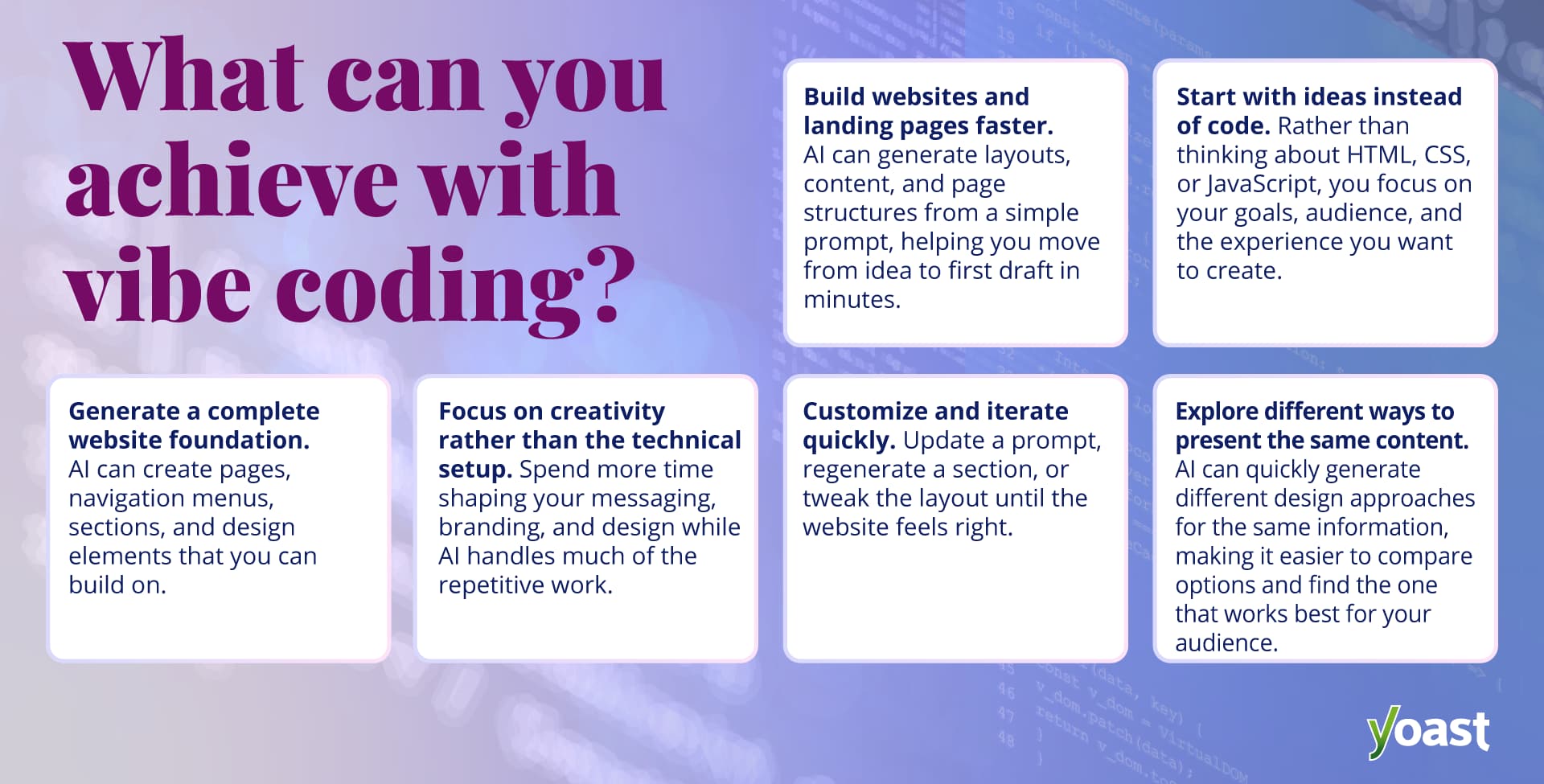
With vibe coding, you can:
- Build websites and landing pages faster. AI can generate layouts, content, and page structures from a simple prompt, helping you move from idea to first draft in minutes.
- Start with ideas instead of code. Rather than thinking about HTML, CSS, or JavaScript, you focus on your goals, audience, and the experience you want to create.
- Generate a complete website foundation. AI can create pages, navigation menus, sections, and design elements that you can build on.
- Focus on creativity rather than the technical setup. Spend more time shaping your messaging, branding, and design while AI handles much of the repetitive work and offloads technical tasks.
- Customize and iterate quickly. AI-generated websites can be refined through multiple iterations, allowing you to adjust layouts, content, and other design elements until they match your needs.
- Explore different ways to present the same content. AI can quickly generate different design approaches for the same information, making it easier to compare options and find the one that works best for your audience.
For example, you could ask AI to create three versions of the same interface: one with low-contrast colors, one with vibrant colors, and one with a dark-mode option.
Understanding vibe coding for building a website
When the concepts of vibe coding are applied to website design, it means you can converse with an AI platform and bring your vision to life online without worrying about complex concepts like HTML, CSS, JavaScript, or other programming languages. Simply explain your brand in plain English and let AI handle much of the technical work.
For example, you could prompt an AI with something like:
“Create a modern website for a local coffee shop with warm colors, an online menu, customer testimonials, and a contact form.”
This conversational approach makes website creation much more accessible, especially for entrepreneurs, freelancers, creators, and small business owners who have ideas but little or no coding experience.
That said, vibe coding doesn’t eliminate the need for human input. AI can generate a strong starting point, but creating a successful website still depends on having a clear goal, understanding your audience, and reviewing the output before going online.
Key benefits of vibe coding a website
Vibe coding is changing the way people approach website creation. Instead of spending weeks learning programming languages or waiting for a first draft, you can start with an idea and let AI help you bring it to life.
For anyone with a website idea, that shift means more time to focus on what they want to achieve and less time spent worrying about the technical details. Even experienced developers are embracing vibe coding for rapid prototyping and repetitive development tasks because it helps them move from concept to execution much faster.
Here are some of the biggest reasons why vibe coding is gaining momentum:
Launch ideas in hours, not weeks
Every website starts as an idea, but turning that idea into something people can visit has traditionally taken time. Vibe coding shortens that journey considerably. By describing your website in natural language, AI can generate a functional first draft in minutes. Instead of staring at a blank screen, you’re reviewing something tangible and deciding how to improve it. That faster start means you can validate ideas, collect feedback, and get your business online sooner.
Also read: New: Yoast AI Content Planner turns a blank post into a structured draft
Experiment and prototypes faster
One of the biggest advantages of vibe coding is how quickly it lets you test and refine ideas. Instead of spending days or weeks building a prototype from scratch, you can describe your vision in plain language and let AI generate a working first draft in minutes.
Whether you’re exploring different layouts, validating a business idea, or creating a website for a client, you can quickly experiment, gather feedback, and improve the result through conversation, making it easier to iterate before investing significant time or resources.
Iterate through conversations
Perhaps the biggest shift isn’t that AI writes code, it’s that building a website becomes a conversation.
Instead of manually editing every element, you can ask AI to redesign a section, rewrite your homepage copy, add a testimonials section, or make the layout feel more modern. Each prompt builds on the previous one, allowing your website to evolve naturally over time.
Can you really build a website using prompts?
The answer is yes, but it’s not because AI has replaced websites with something entirely new. Instead, it has changed how we build them.
Think of prompts as the new interface for website creation. Instead of dragging elements onto a page or writing HTML and CSS, you describe your business, goals, and the kind of website you want. Modern AI website builders then translate those instructions into a functional first draft, which you can continue refining through conversation.
Also read: Perfect prompts: 10 tips for AI-driven SEO content creation
That doesn’t mean prompting replaces creativity or strategy. AI can generate the website, but it still relies on your direction. The clearer your vision and the more context you provide, the closer the final website will be to what you imagined.
How to vibe code a website in 5 steps
Building a website with vibe coding isn’t about finding the perfect prompt; it’s about following the right process. The more clearly you communicate your goals and refine the results, the closer your website will be to what you originally envisioned.
Here’s a simple five-step framework to help you get started.
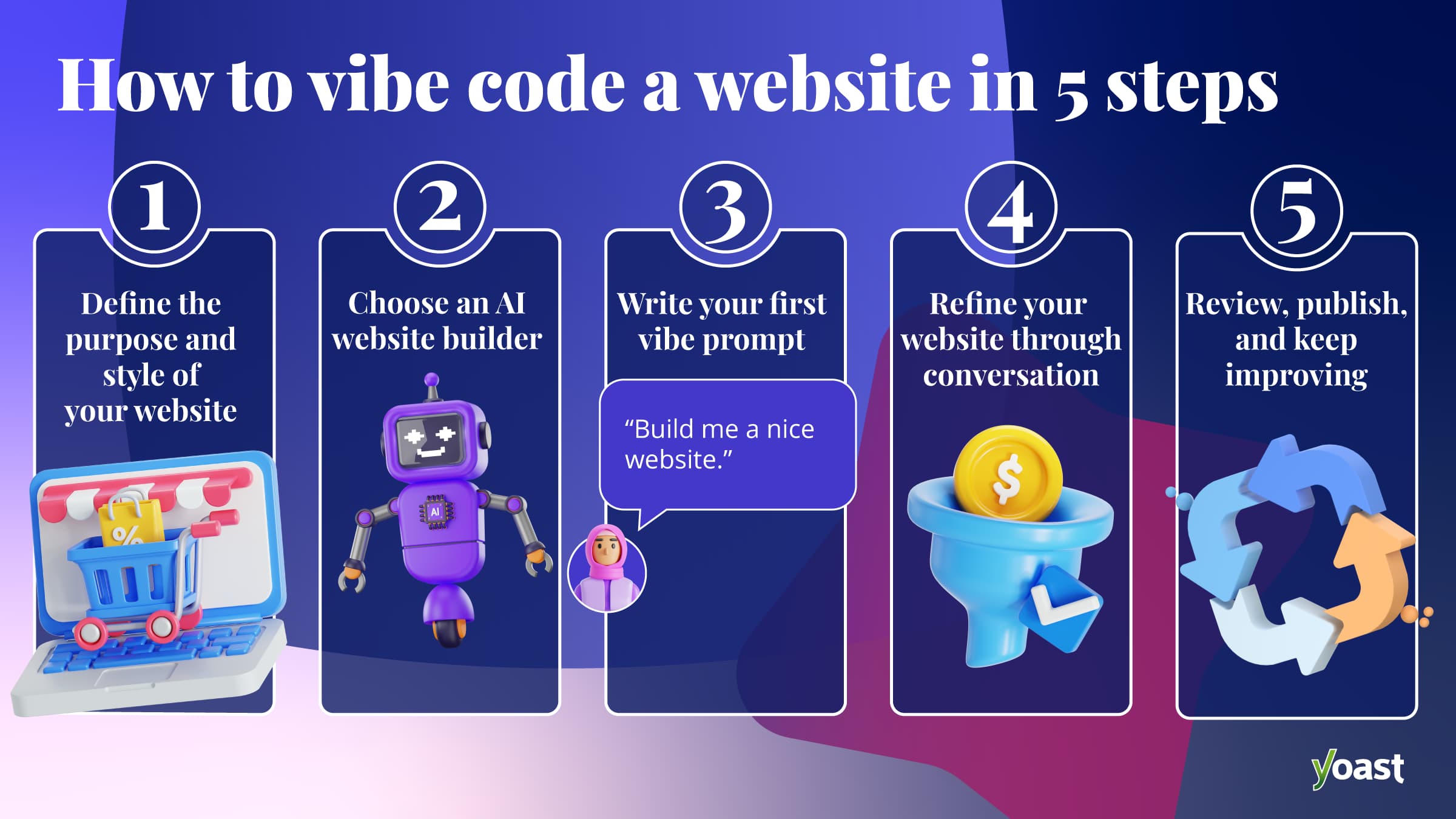
1. Define the purpose and style of your website
Before you open an AI website builder, spend a few minutes thinking about what you want to build. The better you define your vision, the better AI can translate it into a website.
Start by answering a few simple questions:
- Who is the website for?
- What do you want visitors to do?
- How should your brand feel?
- What pages or features do you need?
For example, instead of writing: “Build me a business website.”
Try something more descriptive:
“Create a modern website for a boutique coffee roastery. Use warm earth tones, clean typography, and large product images. Include a homepage, About page, online shop, customer reviews, and a contact form. The overall style should feel welcoming, premium, and easy to navigate.”
It explains the website’s purpose, functionality, and personality, which is important for launching as a brand or business that people are searching for.
Also read: What is search intent and why is it important for SEO?
2. Choose an AI website builder
Once you have a clear idea of the website you want to create, the next step is choosing the right AI website builder.
AI tools can support website development in different ways. For example, coding agents such as Claude Code offer specialized capabilities for building websites, but they typically require you to work in a development environment or via a command-line interface.
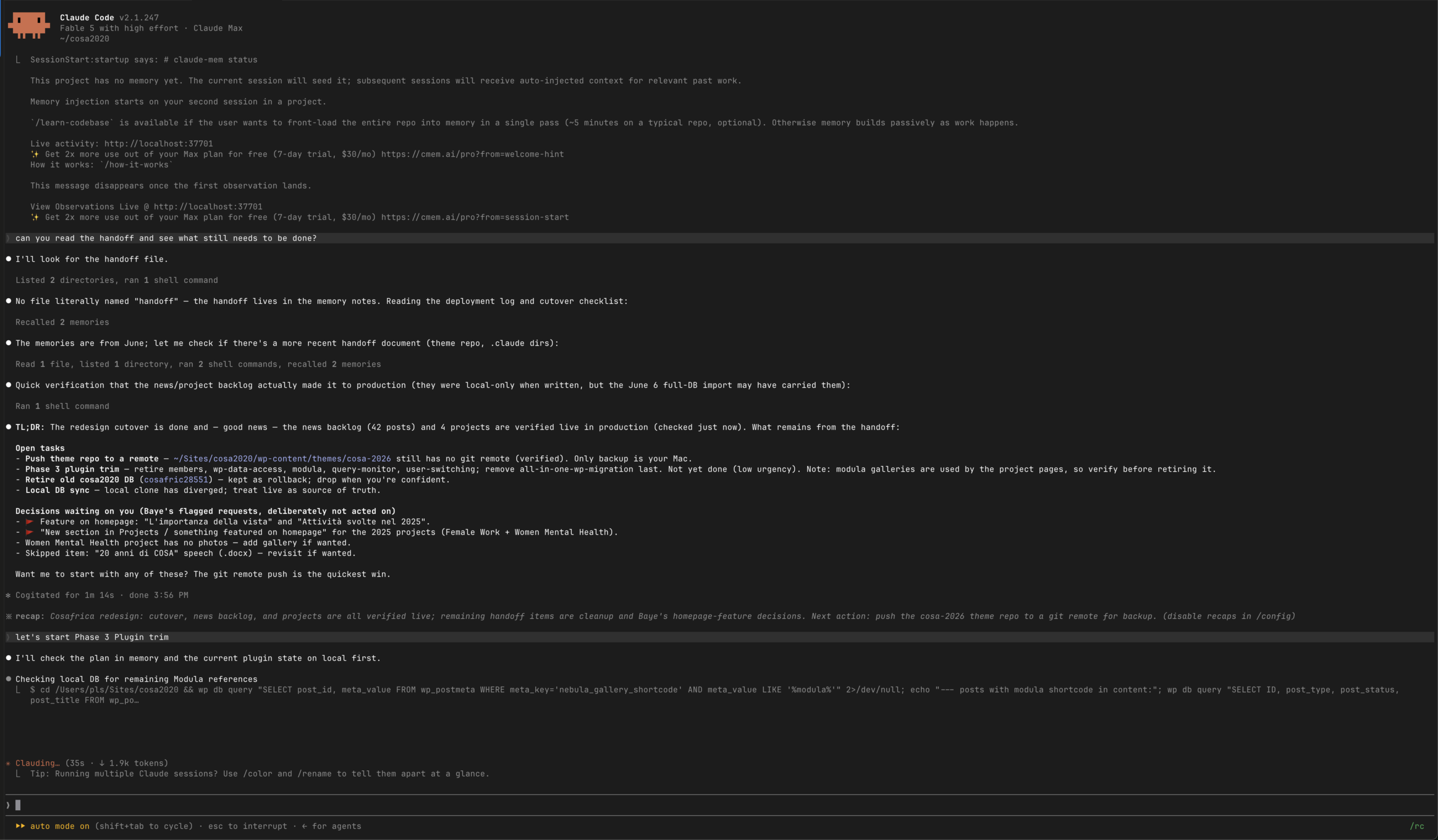
On the other hand, AI website builders offer a more accessible alternative: instead of working in a terminal or configuring a development environment, you can describe what you want through a conversational interface and start with a functional website that you can refine.
If you’re building a website with AI, the Bluehost AI Website Builder is a great place to start. It asks a few questions about your business, goals, and preferred style before generating a personalized website that you can continue to customize. Because it’s built into Bluehost’s hosting platform, you can go from idea to a live website without juggling multiple tools or worrying about technical setup.
From there, your role shifts from building pages manually to guiding AI toward the website you envision.
3. Write your first vibe prompt
Your first prompt lays the foundation for everything that follows, so it’s worth spending a little extra time getting it right.
This is where the idea of context engineering becomes useful. Rather than trying to cram every instruction into one clever prompt, think about the information AI needs to understand your project: what you’re building, who it’s for, how it should look and feel, what pages it needs, and what you want visitors to do.
You can build this context around:
- your business or project
- your target audience
- your preferred design style
- the pages you need
- important features or functionality
- your brand’s tone of voice
The key idea is simple: don’t focus on writing a clever prompt; focus on giving AI the context it needs to make good decisions. And as you continue vibe coding, you can add or refine that context through subsequent conversations rather than trying to get everything right in your first message.
4. Refine your website through conversation
Don’t expect your first prompt to produce the perfect website, and that’s completely normal. Vibe coding is an iterative process. Once AI generates the first version, continue the conversation by making small, focused improvements.
For example, you could ask AI to:
- make the hero section more visually engaging
- rewrite your homepage copy in a friendlier tone
- replace placeholder images with a cleaner layout
- add customer testimonials
- improve the mobile experience
- make the call-to-action button more prominent
Making one change at a time usually produces better results than asking AI to redesign the entire website in a single prompt. Think of each prompt as another design review. With every iteration, your website moves closer to the experience you originally imagined.
5. Review, publish, and keep improving
Before publishing your website, take some time to review everything AI has generated.
Check that the content accurately represents your business, all links and forms work correctly, and the design looks good on both desktop and mobile devices. This is also the perfect time to replace placeholder text, add your own images, and make sure the website reflects your brand.
Once you’re happy with the result, connect your custom domain and publish your website.
One of the biggest advantages of vibe coding is that the process doesn’t stop after launch. Need to add a new service, update your homepage, or create a landing page for a campaign? Simply return to the AI website builder, describe what you want, and continue refining your website through conversation instead of starting from scratch.
How to avoid the vibe coding doom loop
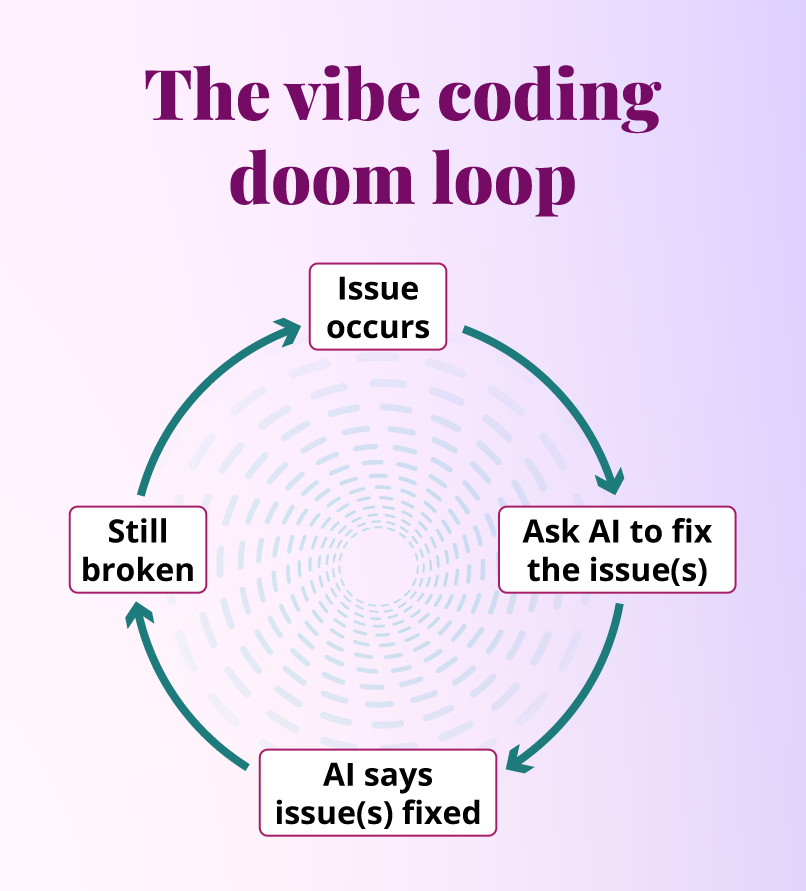
One of the biggest advantages of vibe coding is how quickly you can turn an idea into a working website. But as you continue refining your prompts, there’s a chance you’ll run into what’s commonly known as the vibe coding doom loop.
This happens when AI gets stuck trying to solve the same issue repeatedly without actually fixing it. It may suggest several “solutions,” but each one either introduces a new problem or brings you back to where you started. Instead of moving your website forward, you end up going in circles.
The doom loop usually happens when AI loses track of the bigger picture. This can occur if your original prompts are too vague, you keep changing your website’s direction midway through the process, or you request too many unrelated changes at once. As the conversation becomes more complex, the AI may struggle to connect all the pieces together, leading to inconsistent results.
How to fix this situation
The good news is that the vibe coding doom loop is usually avoidable. A few simple habits can help you keep AI on track and make the website-building process much smoother.
Get clarity on what you want
As mentioned earlier, context engineering is about giving AI the information it needs to make better decisions, rather than relying on increasingly elaborate prompts. Before asking AI to make changes, consider whether you’ve provided enough context about what you’re trying to achieve, who the website is for, and what you want the change to accomplish.
For instance, if you’re refining your homepage, explain the outcome you’re aiming for and provide relevant context about your audience, messaging, layout, or user experience. This gives AI a better basis for making the change and reduces the chances of it solving one problem while creating another.
Manage AI mistakes instead of chasing them
It’s important to remember that AI isn’t perfect. Treat each suggestion as a draft rather than a final answer. Review every change before moving on, make one improvement at a time, and don’t hesitate to undo or rephrase a prompt if the output isn’t what you expected. A little oversight goes a long way in preventing small issues from turning into bigger ones.
Vibe coding vs. traditional coding: What’s the difference?
By now, you’ve probably noticed that vibe coding doesn’t completely reinvent website development; it simply changes the way you interact with it. Instead of writing every line of code yourself, you’re guiding AI with prompts and refining the results through conversation.
That doesn’t mean traditional coding has become obsolete. Developers still rely on it to build highly customized websites, complex web applications, and features that require complete control over every aspect of the codebase. Vibe coding, on the other hand, focuses on speed, accessibility, and helping people bring ideas to life without getting bogged down in technical details.
Ultimately, both approaches can produce excellent websites. The biggest difference isn’t the final outcome; it’s the path you take to get there.
| Website aspect | Traditional coding | Vibe coding |
| Primary input | Programming languages like HTML, CSS, JavaScript, and PHP | Natural language prompts |
| Required skills | Coding and web development knowledge | Clear communication and prompt writing |
| Development process | Manual coding and debugging | AI-assisted generation and refinement |
| Time to first draft | Usually longer | Usually much faster |
| Customization | Unlimited control | High, depending on the AI tool |
| Best suited for | Complex, highly customized websites and applications | Business websites, portfolios, landing pages, MVPs, and rapid prototyping |
| Barrier to entry | Higher | Lower, making it accessible to non-coders |
Vibe coding a website: FAQs
Vibe coding is a great fit for entrepreneurs, freelancers, creators, marketers, and small business owners who want to launch a professional website without having to learn to code. It’s also useful for designers and developers who want to prototype ideas quickly before investing time in a full-scale build. If you have a clear vision but limited technical experience, vibe coding can help you bring that vision online much faster.
If you’re building a website, an AI website builder is the easiest place to start because it combines AI-generated design, hosting, and customization in one workflow. For example, the Bluehost AI Website Builder helps turn your prompts into a personalized website that you can continue to refine through conversation. If you’re creating an online store, Bluehost AI Store provides AI-powered ecommerce capabilities, while the Bluehost AI All Access Pack brings together multiple AI tools for building, managing, and growing your website.
Once your website is live, you can complement it with Yoast SEO AI+. It helps you prepare for the future of search by monitoring how your brand appears in AI-powered search experiences, tracking AI visibility over time, and providing insights into your brand’s presence alongside competitors.
The answer depends on your website’s complexity, but one of the biggest advantages of vibe coding is how quickly you can create a functional first draft. Many AI website builders can generate a website within minutes, while the remaining time is usually spent refining the design, content, and functionality to match your goals.
If you’d like a detailed breakdown of what influences the timeline, read our guide on how long it takes to build a website with AI.
Your prompts build the site. SEO helps people find it
Creating a website is an exciting milestone, but publishing it is only the beginning. Whether you’ve built your website through traditional development or vibe coding, it still needs to be discovered by the people you’re trying to reach. That’s where SEO comes in.
Today, your website isn’t just being read by search engines. AI assistants and other intelligent systems are also interpreting your content to answer questions, recommend businesses, and surface relevant information. That means your website needs to communicate clearly with both people and machines.
If you’re running a WordPress website, Yoast SEO Premium helps lay that foundation. It automatically generates structured data that helps search engines and AI systems better understand your pages, your content, and your expertise. Features such as schema aggregation create a unified view of your website’s structured data, while the Bot Blocker gives you more control over which AI systems can use your content for training.
A smarter analysis in Yoast SEO Premium
Yoast SEO Premium has a smart content analysis that helps you take your content to the next level!
SEO doesn’t stop once your website is published, either. Creating optimized titles and meta descriptions for every page can be time-consuming, especially as your website grows. Yoast SEO Premium helps speed up that process with AI-powered suggestions that can draft SEO titles and meta descriptions for individual pages or in bulk. Every suggestion remains fully editable, giving you the final say before anything goes live.
The post Prompts to programming: Vibe coding vs. traditional coding a website appeared first on Yoast.