Your jewelry can have all the bling, but first, people need to find it. Whether you sell ready-to-wear pieces, craft custom designs, or make jewelry for other businesses, search can put your work in front of people looking for exactly what you offer. That’s where SEO comes in. In this guide, we’ll explore why SEO matters for jewelry businesses, what people and AI models are searching for, and how to make your website shine in search.
Key Takeaways
- Use SEO to help people find your jewelry business during active searches
- Focus on what makes your business unique to attract a relevant audience, even as a small brand
- Optimize web pages with clear purposes, helpful descriptions, and quality images for better search visibility
- Address common customer questions through FAQs to enhance user experience and SEO effectiveness
- Use local SEO techniques to connect with nearby customers while ensuring your website functions well for search engines
Why SEO matters for jewelers and jewelry brands
SEO can help the right people discover what you offer. Here are three reasons to make it part of your jewelry business’s growth strategy:
Meet customers where they’re searching
Social media can help you showcase your jewelry, but going viral isn’t easy. You’re competing with countless other creators and brands for attention, and a post’s reach can fade quickly. SEO gives you another way to get discovered: helping people find your business when they’re actively searching for jewelry, products, or services like yours.
Did you know?
There’s plenty of search demand to tap into. A 2026 analysis by Softscotch estimated 673,000 monthly searches for “jewelry stores near me” and 40,500 for “custom jewelry.” People are also exploring brands through AI tools, making it increasingly important to build an online presence that clearly explains what your business offers.
Also read: Does social media influence your SEO?
Small jewelry brands can compete through search
You don’t need to rank for every jewelry-related search to attract customers. Focus on what makes your business different, whether that’s handmade silver rings, personalized wedding jewelry, or custom pieces for corporate clients. Targeting specific searches that match your products, services, and expertise can help you reach a more relevant audience, even if you’re a small business competing with established brands.
| Don’t have a website yet? Bluehost’s AI Website Builder can help you create a website to showcase your jewelry, portfolio, and services without having to code from scratch. |
Do check: The complete guide to building a website with AI
Build visibility you don’t have to chase every day
Unlike a social media post that may quickly lose visibility, useful, well-optimized website content can continue attracting people through search long after you publish it. A page about custom wedding jewelry, for example, can help potential customers discover your services whenever they’re looking for them.
SEO isn’t a one-time task, and results aren’t guaranteed. By keeping your website useful, relevant, and up to date, you can build a lasting foundation for your jewelry business’s online visibility.
Overall, think of SEO as building an asset, not chasing a moment. You’re creating a website that can steadily become more useful, relevant, and discoverable as your business grows.
What does SEO mean for a jewelry business?
SEO for a jewelry business is about understanding what your potential customers search for, the search intent behind those queries, and how your jewelry, services, and expertise can meet that intent. Before targeting keywords, you need to understand what makes your jewelry business unique and what your customers are looking for at different stages of their search.
Know what makes your jewelry business different
Before you start researching keywords, take a step back and define what makes your jewelry business unique. SEO works best when you connect what you offer with what your customers search for. That means looking beyond broad terms like “jewelry” or “jewelry store” and identifying the details that make your business relevant to specific searches.
Ask yourself:
- What do you sell or make? Do you sell ready-to-wear jewelry, create custom pieces, or offer jewelry repair?
- Who do you sell to? Are you targeting individual shoppers, couples, collectors, other businesses, or a specific customer group?
- What occasions do you serve? Think engagements, weddings, anniversaries, birthdays, gifting, or everyday wear
- What materials or styles do you specialize in? You might focus on gold, silver, diamonds, gemstones, handmade pieces, vintage jewelry, or a particular design style
- Do you serve a particular location? A local jeweler may need to target searches that include a city, neighborhood, or phrases such as jewelry store near me
- Are you B2C, B2B, or both? A jewelry manufacturer selling to retailers will have very different search opportunities from a jewelry brand selling directly to consumers
Must read: B2B websites and SEO B2C and B2B: what are the differences? - What makes your jewelry or brand special? Your craftsmanship, ethical sourcing, customization options, heritage, materials, or design philosophy can all shape the searches you want to appear for
These answers help you narrow down your SEO focus. A jeweler specializing in custom engagement rings in London, for example, has a very different opportunity from a jewelry retailer selling affordable silver earrings online.
Understand what your customers search for
Once you know what makes your jewelry business different, the next step is to understand what your potential customers search for and the search intent behind those queries. People don’t always search for a business directly. They may search for a specific product, compare different options, look for a service, or seek advice before making a purchase.
Think about the different ways someone might search for what you offer:
- Product searches: These searches focus on a specific piece of jewelry, such as gold hoop earrings, diamond engagement rings, or custom name necklaces
- Category searches: These are broader searches for a type of jewelry, such as women’s gold jewelry, silver jewelry, or wedding jewelry
- Service searches: People looking for a service may search for terms like custom jewelry design, jewelry repair, ring resizing, or custom engagement rings
- Occasion-based searches: Jewelry often connects to important moments, so people may search for anniversary jewelry, wedding jewelry, or engagement ring ideas
- Informational searches: Not everyone searching for jewelry is ready to buy. They may first want to learn something, such as how to choose a diamond, what 14k gold means, or how to clean gold jewelry
- Local searches: If you have a physical store or serve a specific area, customers may search for jewelry store near me, jeweler in [city], or custom jewelry [location]
These searches can have very different search intent, even when they relate to the same product. Someone searching for how to choose an engagement ring wants information, while someone searching for custom engagement rings in London may be looking for a jeweler. So, don’t try to rank for every jewelry-related keyword. Focus on the searches that match what your business offers and what your customers need.
How to improve SEO for your jewelry website
Now that we know why SEO matters and how it can help jewelry businesses reach the right audience, let’s look at how to put it into practice. From choosing the right keywords to optimizing product pages and images, a few thoughtful changes can make your website easier to find and more useful to potential customers.
1. Find the right keywords for your jewelry business
Before optimizing your website, you need to understand what potential customers are searching for. Keyword research helps you discover the words and phrases people use when looking for jewelry, custom designs, or services like yours.
Start by identifying what makes your business stand out. Do you create handmade jewelry, use sustainable materials, specialize in personalized pieces, or manufacture jewelry for other brands? Perhaps you’re a local jeweler known for engagement rings or a maker who creates one-of-a-kind designs. These unique selling points (USPs) can help you identify the searches most relevant to your business.
Here’s a blueprint that offers an overview of finding the right keywords for your jewelry website:
- Brainstorm search terms. Start with the products and services you offer, the customers you serve, and what makes your business different. For example, a maker specializing in sustainable jewelry might start with “sustainable jewelry,” “recycled gold rings,” and “ethical gemstone jewelry.”
- Explore related keywords. Use a keyword research tool like Semrush to discover related search terms and learn more about their search volume, trends, and competition. Look for phrases that reflect your actual offerings, rather than choosing keywords for their search volume alone.
- Consider search intent. Ask yourself what someone wants when they search for a phrase. Someone searching for “how to clean gold jewelry” wants advice, while someone searching for “handmade gold necklaces” may be looking for products to buy. Choose keywords that match the purpose of your page.
- Get specific. Broad terms like “jewelry” can be highly competitive. More specifically, long-tail keywords, such as “personalized gold necklaces for bridesmaids,” can help you reach people looking for something particular. These phrases may have lower search volumes. Still, they can be more relevant to your business.
- Match keywords to the right pages. Use product-related keywords for product pages, service-related keywords for service pages, and informational keywords for helpful articles. Avoid trying to rank every page for the same broad term.
Remember, keyword research isn’t about finding the most popular terms and squeezing them into your website. It’s about understanding your audience, identifying what makes your jewelry business different, and choosing the searches that connect the two.
You can also simplify this process with Keyword data via Semrush in Yoast. Available in Yoast SEO, Yoast SEO Premium, and Yoast SEO for Shopify, this integration suggests related keyphrases and provides insights such as search volume and trends, helping you find relevant terms without constantly switching between tools.
2. Give every page a clear purpose
Once you have a list of relevant keywords, decide which pages should target them. Each important page on your website should serve a distinct purpose and meet a particular customer need.
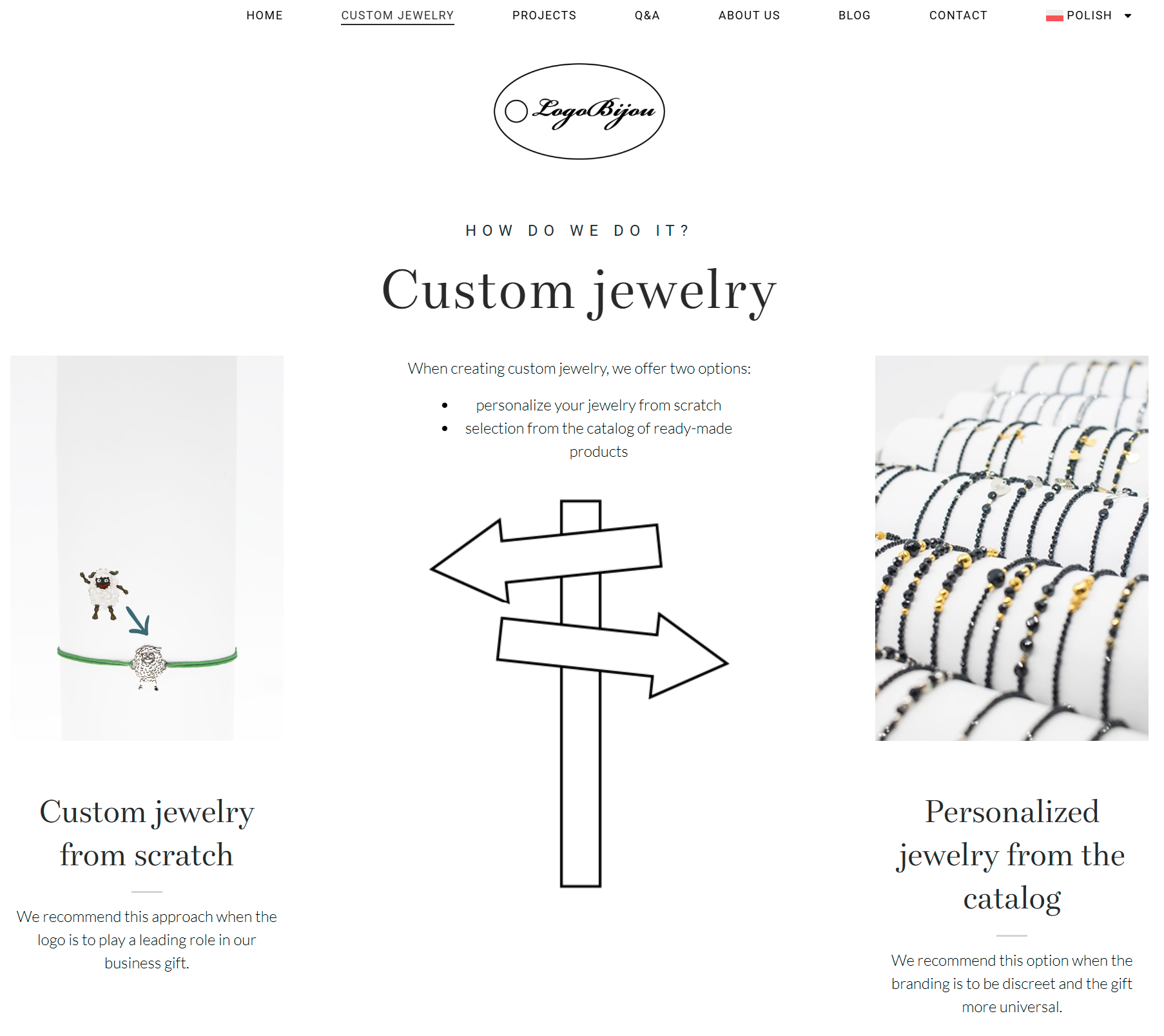
For example, a jewelry retailer might have a category page for gold rings and individual product pages for specific designs. A custom jewelry manufacturer, on the other hand, might create separate service pages for personalized bracelets, corporate gifts, and event jewelry. This helps potential customers find the most relevant information without having to navigate through unrelated offerings.
That’s the approach taken by Polish jewelry company LogoBijou. The company creates custom-made jewelry for businesses, brands, and institutions, including personalized bracelets, pendants, cufflinks, and pieces for corporate gifts and events. Its website showcases its work and helps potential clients understand the projects it can create.
Your website should also tell people who you are and what makes your business worth choosing. An ‘Our story’ page is a good place to share your background, craftsmanship, inspiration, materials, and values. For jewelry businesses, these details can help build trust and distinguish your work from similar offerings. They can also give search engines and AI systems useful context about your business.
3. Optimize your product pages with clear, helpful descriptions
Your product pages should help potential customers understand what you’re selling while giving search engines and AI tools accurate information to interpret your products and surface them for relevant searches and queries.
Start with descriptive titles and detailed product descriptions that highlight the materials, design, dimensions, finish, and customization options. For example, instead of a vague title like “Ring,” use “18-karat gold ring for everyday wear.” Then, make the description more useful by including specific, verifiable details about the piece.
Interesting read: 7 ways to improve product descriptions in your online store
Take a look at a product page from Lemoniq. Its Taurus bracelet page illustrates how to combine descriptive copy with practical product details.
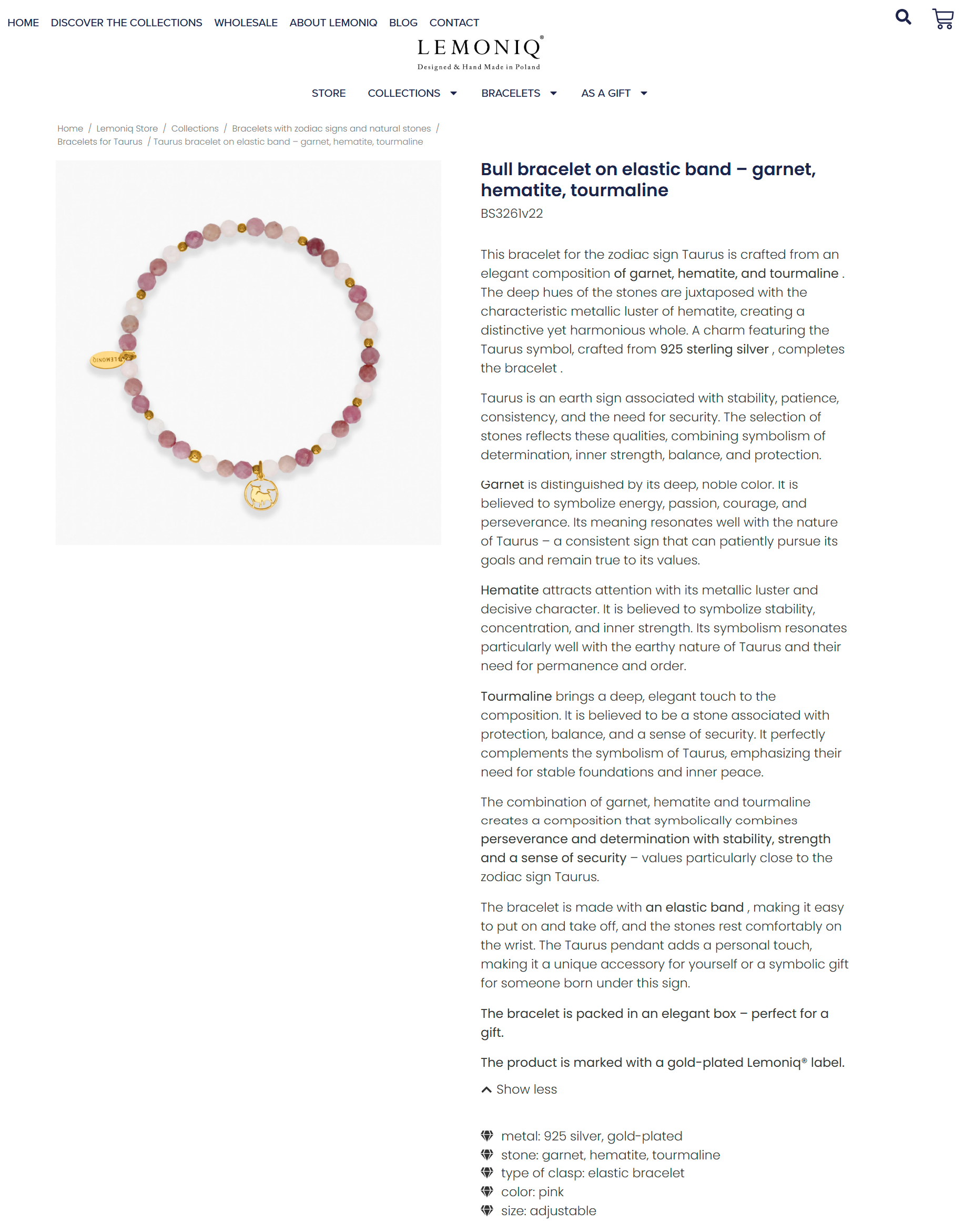
Here are four ways to improve your product descriptions, using Lemoniq as an example:
Be specific about the product
Include details that help customers understand exactly what they’re buying. Lemoniq’s Taurus bracelet page specifies garnet, hematite, and tourmaline, along with gold-plated 925 silver, color, clasp type, and size. This information helps shoppers assess the product and gives search engines and AI tools specific attributes to interpret.
Explain the design and its context
Tell shoppers what inspired a piece or what makes it meaningful. For instance, Lemoniq connects its Taurus bracelet to the zodiac sign and explains the symbolism associated with Taurus and the gemstones. This context helps shoppers understand the design and gives search engines and AI tools more information about its significance.
Answer questions before customers ask them
Anticipate what shoppers need to know before buying, from sizing and materials to customization, care, shipping, and returns. Lemoniq, for instance, specifies the bracelet’s elastic band, adjustable size, and gift packaging. Clear answers help customers make informed decisions and provide useful context for search engines and AI tools.
Keep descriptions original and accurate
Avoid using the same generic description across your product catalog. Highlight what makes each piece different, whether it’s the craftsmanship, design inspiration, or intended use. Unique, accurate descriptions help customers distinguish between products and give search engines and AI tools information specific to each item.
The takeaway? Be descriptive, accurate, and transparent about what you offer. Beyond your product pages, make it easy for people and discovery systems to learn about your business, craftsmanship, and sourcing practices.
Pro tip:
Don’t focus only on your product pages. An informative About Us page, verifiable credentials, and credible mentions from relevant industry sources help establish your jewelry business’s experience, expertise, authoritativeness, and trustworthiness (E-E-A-T). These signals can build trust with potential customers and support your visibility in search results and AI-generated answers.
4. Make your jewelry images work harder
Jewelry is a visual product. People want to see the details, finish, and craftsmanship before deciding whether to buy a piece or commission a similar design. High-quality, genuine product photography is therefore essential to both the shopping experience and your website’s presentation.
Whenever possible, use your own photographs of the actual jewelry you sell or make. Show the piece from multiple angles, capture important details, and include a sense of scale where useful. For custom jewelry makers, photographs of completed projects can also demonstrate your craftsmanship and help potential clients understand what you’re capable of creating.
Alongside the photography itself, pay attention to these SEO basics:
Use descriptive filenames
Instead of uploading an image named IMG_1234.jpg, use a meaningful filename such as handmade-silver-pendant.jpg. Here’s what Google Search Central’s doc on image SEO best practices says about image filenames:
“… filename can give Google very light clues about the subject matter of the image. When possible, use filenames that are short, but descriptive.”
Write useful alt text
Describe what the image shows, such as “Handmade silver pendant with an oval blue gemstone.” Don’t stuff alt text with keywords or include details that aren’t visible. Image alt text improves accessibility and helps search engines understand the image’s subject matter.
If you use Yoast WooCommerce SEO, you can also check for missing alt text across your product catalog using the Bulk Editor and generate image alt text with AI. You can review, edit, or approve each suggestion before applying it.
Optimize image file sizes
Compress images appropriately so they load quickly without sacrificing too much visual quality. Here’s what the Google Search Central article mentions about the image file sizes:
“Images are often the largest contributor to overall page size, which can make pages slow and expensive to load.”
Along with compressing images, you can use responsive image techniques, HTML attributes, CSS styling, and modern optimization strategies like lazy loading to deliver the right image file size, improving overall website performance, reducing data usage, and enhancing user experience.
Use suitable image dimensions and formats
Choose image dimensions and formats appropriate for how your photos appear on your website. This helps prevent unnecessarily large downloads, keeps images looking sharp, and supports a smooth experience across devices.
Show multiple useful views
Include front, side, close-up, and scale-reference images where relevant. These views help shoppers assess details such as a piece’s finish, craftsmanship, and proportions, giving them more information to make confident purchasing decisions.
These practices help make your website more accessible and improve the page experience. They also give search engines useful context about your images. However, you have to remember that descriptive filenames and alt text complement good photography; they can’t make up for poor-quality or misleading product images.
5. Add FAQs that answer your customers’ questions
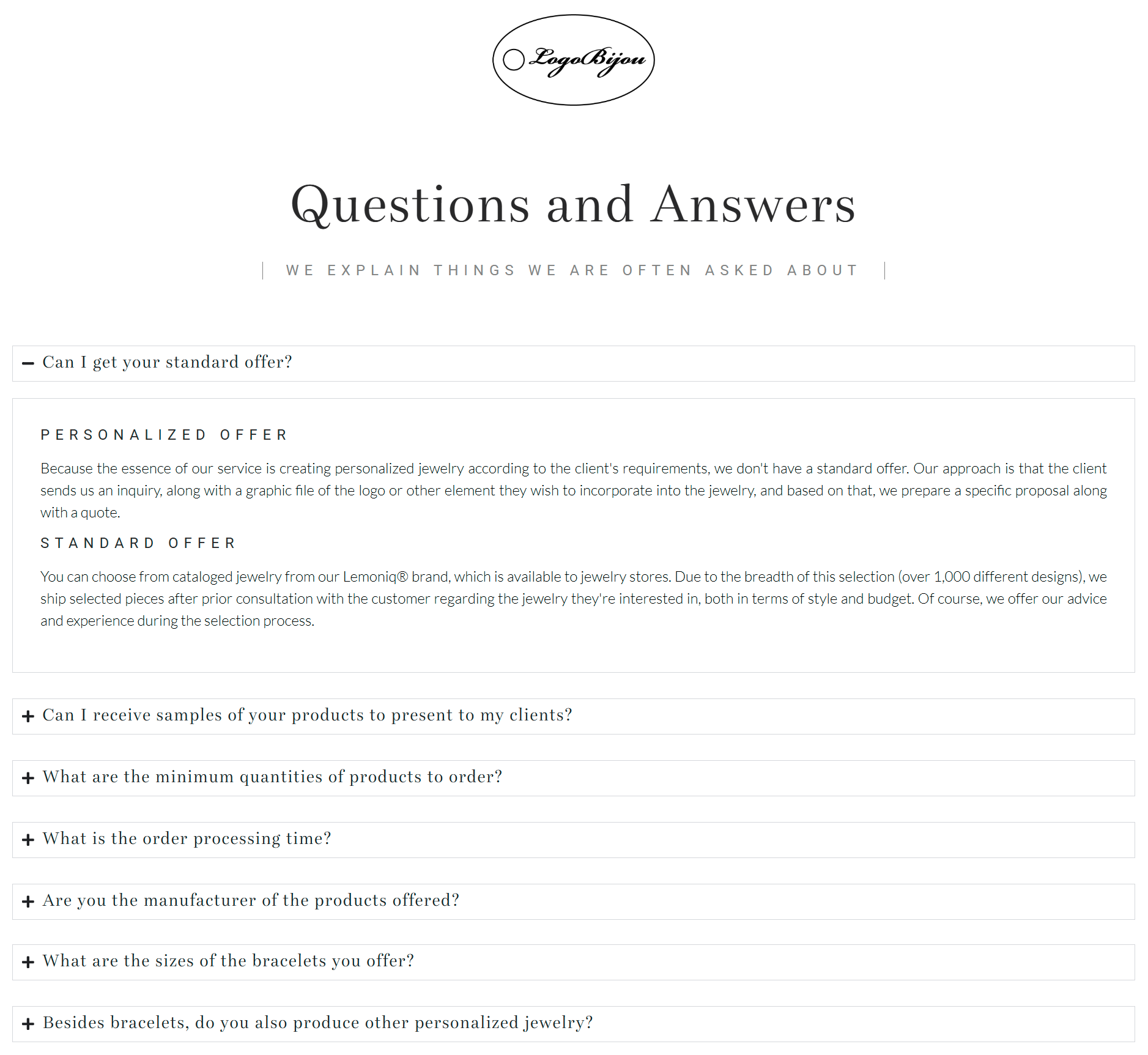
Jewelry can be a costly purchase, and it often comes with a lot of questions. Customers want to know how to choose the right ring size, care tips for a gemstone, how to compare gold purities, or how to customize a piece. Answering these questions helps you reach people who are searching for that information before they’re ready to buy.
FAQs are a great way to address specific, conversational queries that might not fit naturally into a product description. Clear, direct answers give search engines and AI tools useful content to interpret when responding to relevant questions.
So what should you do?
Make your FAQs useful to both potential customers and search engines by following these practices:
- Start with real customer questions. Look at customer emails, product reviews, and conversations with sales staff to identify common questions about sizing, materials, customization, shipping, and jewelry care
- Write clear answers and place them strategically. Phrase questions naturally, such as “Can I customize a birthstone bracelet?” or “How do I choose the right necklace length?” Answer them directly and place them on relevant product, category, or service pages. Use a dedicated FAQ page for broader questions
- Use FAQ structured data. This is code that identifies questions and their corresponding answers on your page, helping search engines interpret your content. For example, it can identify a question like “How do I care for a pearl necklace?” and its answer. Structured data doesn’t guarantee enhanced search results or AI citations, but it helps clarify how your content is organized
If your website runs on WordPress, the Yoast FAQ content block makes it easy to add questions and answers to your pages while automatically adding FAQ structured data. You can focus on providing helpful answers without having to implement the markup manually.
6. Don’t overlook local SEO
If you run a physical jewelry store, serve a particular region, or offer custom jewelry services locally, local SEO can help people in your area discover your business.
Start by identifying the searches local customers might use. These could include “jewelry store in [city],” “custom jeweler near me,” or “wedding jewelry in [city].” Use relevant location terms naturally on your website, particularly on pages that describe your products, services, and the areas you serve.
Here are a few other ways to improve your local visibility:
- Keep your business information accurate. Make sure your business name, address, phone number, and opening hours are correct wherever they’re listed
- Create and maintain a Google Business Profile. Add accurate details, relevant photographs, and the categories that best describe your business
- Encourage genuine customer reviews. Reviews can help potential customers assess your business and decide whether to visit or get in touch
- Create useful location pages where appropriate. If you serve multiple locations, provide genuinely useful information for each one instead of creating near-identical pages that differ only by city name
- Publish relevant local content. You could highlight local events, explain your custom jewelry services in the area, or share work created for local clients
Local SEO isn’t just for retailers with storefronts. Jewelry makers and custom jewelers who serve customers in specific areas can benefit too. The key is to make it clear where you operate and which customers you can help.
If your website runs on WordPress, Yoast SEO Premium’s Local SEO features can help you optimize your website for local searches, manage business location details, and add Google Maps to your site. These tools are especially useful if you operate multiple jewelry store locations.
7. Make your website technically sound
Great jewelry and helpful content won’t bring much search visibility if search engines can’t access your website or understand its pages. Technical SEO helps search engines crawl and index your content, while a well-structured, accessible website also makes it easier for AI systems to retrieve and interpret information about your products and business.
Here is a checklist of the technical SEO essentials for you:
Check crawling and indexing
Search engines need to discover and index your important pages before they can show them in search results; therefore:
- Check that important pages are indexed
- Review your robots.txt file
- Fix broken links and redirects
Also read: What is indexing in regards to Google?
Make your website fast and mobile-friendly
Shoppers should be able to browse your jewelry, examine product images, and navigate your store without friction; therefore:
- Optimize your pages to boost site speed
- Make sure your site works smoothly on phones
- Keep important content accessible
Organize your website navigation
A clear website structure helps customers find the right products and helps search engines and large language models (LLMs) understand how your pages relate to one another; therefore:
- Organize products into meaningful tags and categories, such as rings, necklaces, bracelets, wedding jewelry, or personalized gifts
- Internally link and connect relevant product pages, category pages, buying guides, and jewelry care articles so visitors and crawlers can discover more of your content
- Use descriptive permalinks and breadcrumbs
Also read: How to perfect the category page of your online store
Help search engines understand your products
Structured data provides additional context about your products and business, therefore:
- Add relevant structured data to accurately describe product details such as the product name, price, availability, and more
- Secure your website with HTTPS to protect information exchanged between your site and its visitors
- Keep key product information like prices, stock availability, shipping details, and return policies consistent
Check your website’s readiness for AI discovery
AI discoverability isn’t a separate technical checklist that replaces SEO. Start with the fundamentals above, along with the following:
- Use clear, semantic HTML to make your website easier for LLMs to interpret and answer user queries
- Avoid hiding critical information behind interfaces that AI models may struggle to access
- Consider adding an llms.txt file, an emerging format that AI tools may use to find your most important content
Bonus tip: Keep your jewelry website fresh and relevant for seasonal shopping moments
Jewelry is more than an accessory; it can celebrate relationships, mark milestones, and create lasting memories. According to Shazé, 68% of consumers associate jewelry gifts with emotional closeness and stronger relationships.
For jewelry businesses, occasions like Valentine’s Day, Mother’s Day, anniversaries, Black Friday, and Christmas offer opportunities to reach shoppers looking for meaningful gifts. Prepare seasonal landing pages, gift guides, and product collections in advance to help customers discover the right pieces when they’re ready to buy.
Here are a few ways to prepare your website for seasonal demand:
- Create occasion-specific content.
Develop gift guides and landing pages around relevant occasions, such as personalized anniversary jewelry, Mother’s Day gifts, or Christmas gifts for jewelry lovers. Include useful recommendations that help shoppers choose the right piece. - Refresh existing product and category pages.
Highlight suitable products, update descriptions, and link to relevant seasonal collections. Make sure prices, stock availability, and delivery information are accurate. - Plan your content ahead of time.
Publish seasonal pages early enough for search engines to discover and index them before demand peaks. Use keyword research to understand what shoppers are searching for and tailor your content accordingly. - Update your content after the season ends.
Remove expired offers and revise outdated delivery information. Keep evergreen gift guides useful year-round, refreshing them as your products or recommendations change.
Seasonal SEO isn’t just about capturing a short-lived spike in traffic. It’s about helping shoppers discover relevant products when they’re ready to buy.
Must read: How to prep your Shopify or WooCommerce store for Black Friday before the rush starts
Use SEO tools to make optimization easier
SEO tools can make optimization easier by helping you identify issues, improve your content, and understand how well your pages are optimized. Instead of guessing what to change, you can use their feedback to make more informed decisions.
Get help optimizing your pages with Yoast
Yoast offers tools to help you optimize your jewelry website, from improving SEO titles, meta descriptions, and content to managing ecommerce SEO with Yoast SEO for Shopify and Yoast WooCommerce SEO. You can also use Yoast SEO AI Brand Insights to explore how your brand’s bling appears in AI-generated answers across platforms like ChatGPT, Gemini, Claude, and Perplexity.
You can see some of these features in action in the video below.
Watch how Christina uses Yoast SEO for Shopify to refine a jewelry product page, from improving its SEO title and meta description to making its content more relevant.
Learn the SEO fundamentals
If you’re new to SEO and looking for a trusted place to learn, Yoast SEO Academy is a great place to start. Its courses help you understand SEO fundamentals and apply them to your website, even if you’re not an SEO expert.
Rafał Juchno from LogoBijou, a Polish jewelry business and Yoast WooCommerce SEO customer, shared his experience in our survey. He explained that Yoast SEO Academy helped make SEO feel less like “black magic” and taught him the value of holistic SEO: building a useful, trustworthy website that attracts the right audience rather than chasing traffic for its own sake.
His advice for other jewelry businesses?
“Understand your industry, your audience, and what potential customers are searching for. You don’t need to be aprogrammer or an SEO expert to start making your website more discoverable.”
Your jewelry deserves to be found
Your jewelry has a story, whether it’s a handcrafted piece, a custom design, or a collection made for other brands. SEO helps you bring that story to the people looking for what you offer. Start with the basics, focus on what makes your business unique, and keep making your website more useful and discoverable. With the right SEO foundations, your jewelry doesn’t have to rely on going viral to get noticed.
The post More than bling: How SEO can help your jewelry brand get found appeared first on Yoast.